

Contemporary on Society
The Gallery - 001



By Shareece Williams
There’s something powerful about standing in the now.
To be a contemporary artist is to take a deep breath in the present and exhale a response so visceral, so layered, that it reverberates into culture. My work across digital painting, collage, and conceptual storytelling is a reflection of this moment, but also a rebellion against the ways society tries to define it for us. In my eyes, contemporary art isn’t just about time. It’s about tension. It's about truth. It's about transformation.
In this essay, I want to unpack what it means to create in the now, and how contemporary art shapes and is shaped by the world we live in. I’ll explore how our lifestyles influence culture, why artistic voices matter more than ever, and how artists like myself, Keith Haring, and Lorna Simpson have used their mediums to stretch the boundaries of what society imagines possible.
What Is Contemporary Art?
Contemporary art is often misunderstood as “whatever’s current,” as though it’s merely a product of trendiness. But that definition erases the depth of what’s really happening here. To me, contemporary art is a mirror, a magnifier, and a magnifying glass. It’s art that engages with this moment—politically, socially, spiritually, and dares to question or amplify the lived experience of now.
It doesn’t just represent modern techniques or digital tools. It embodies modern thinking.
Whereas modern art focused on abstraction and form, contemporary art is centered around conversation. It’s multidisciplinary. It blurs boundaries. It can live in a gallery, a protest, a TikTok video, or a digital collage shared through Substack. It’s rooted in the ability to respond to racism, capitalism, queer existence, climate grief, generational trauma, technological shifts, cultural codes, spiritual rebirth.
Contemporary artists, by nature, are responders. We aren’t only making for beauty’s sake. We’re documenting. We’re translating. We’re creating survival maps.
In my own work—from The Black Series to Echoes of Survival—I explore themes of identity, abuse recovery, capitalism’s grip, and the haunting silence survivors carry. These aren’t just “topics.” They are conditions we live in. And the role of the contemporary artist is to unearth what’s buried beneath those conditions.
Contemporary Lifestyles and Societal Shifts

To talk about art without talking about lifestyle is a disservice to culture. Art does not exist in a vacuum, and neither do we.
The way we live—what we consume, how we move through the world, how we define intimacy, spirituality, work, and rest, is reflected in what we create. Contemporary lifestyles have transformed our relationship to society itself. We are more connected than ever and yet more fractured. We are hyper-visible and still unseen. We’re digitally free but emotionally imprisoned. We chase aesthetics but crave authenticity. And all of this tension feeds the contemporary landscape.
Think about it:
Technology has redefined how we archive life. With the iPhone in my hand, I can capture a moment of grief, isolation, or defiance and turn it into a black-and-white photograph that reflects the emotional atmosphere of an entire generation.
Identity politics have brought race, gender, and queerness into mainstream dialogue, not as background elements, but as cultural flashpoints. Artists no longer wait for permission to center our realities. WE DEMAND IT!
The wellness and healing movement has given birth to art that doesn’t just entertain—it repairs. This is the root of my Abstract Therapy Course (coming soon) and the basis of my belief that creative work can become a site of personal and collective liberation.
Capitalism’s collapse—or at least the awareness of its exploitation—has made way for anti-billionaire art, political satire, and visual protests like my War on Billionaires digital collection. We are reclaiming the power to critique the systems that commodify our labor, our identities, and our futures.
Contemporary lifestyles are complex, layered, and contradictory and so is our art. We are not clean. We are not polished. We are not here for perfect lines or easy stories. We are messy, digital, vulnerable, and powerful. That’s the point.
Why Our Voices Change the Trajectory of Society
What happens when the people on the margins become the narrators?
That’s what we’re witnessing in contemporary society. For centuries, art was gatekept. The canon was filled with the voices of the elite—white, male, wealthy, straight. But today, artists from every background, every identity, every corner of the world are stepping forward and saying: My story is not just valid. It’s necessary.
Our voices matter not because they are loud, but because they are layered. Lived experience shapes perception. And perception shapes what society deems “normal,” “valuable,” “real.”
When we tell our truths—through brush strokes, beats, pixels, or poetry—we shift the narrative terrain.
A collage about survival becomes a teaching tool for trauma recovery.
A digital painting becomes an indictment of billionaires and the corporate class.
A poem whispered at an open mic becomes a rallying cry for someone who thought they were alone.

Our work isn’t just commentary. It’s prophecy.
And this is why art institutions must expand. This is why representation matters. This is why platforms like Substack, Payhip, YouTube, and even Discord become crucial tools—not just for creation, but for cultural resistance.
Contemporary society will be remembered not by its institutions, but by its artists.
And I say this not just as an artist—but as a witness.
Honoring the Voices That Shifted Culture
Keith Haring: The Public Pulse
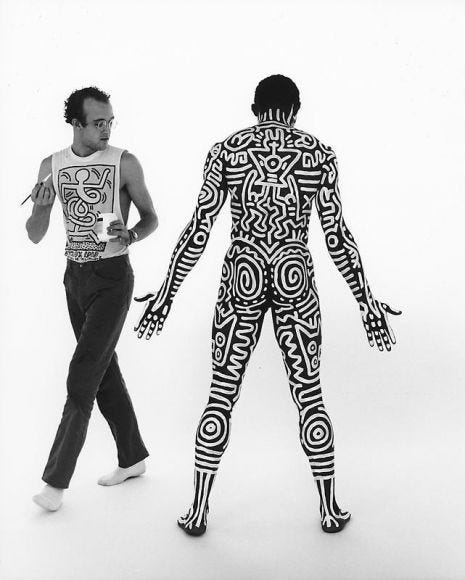
Keith Haring’s work proves that contemporary art doesn’t need to be exclusive or elite. It can live on a subway wall, in a nightclub, in a hospital ward. His iconic linework and radiant figures made HIV/AIDS awareness visual—at a time when most of society wanted to turn its head.
He wasn’t just painting. He was interrupting silence.
That’s the core of what it means to be a visionary artist. Haring’s work still pulses with urgency today because he dared to make art that didn’t hide behind abstraction. He put joy and justice side by side. And he believed, deeply, that art belonged to the people; not the elite.
That’s the energy I carry in every project I do.
Lorna Simpson: The Interrogator of Memory
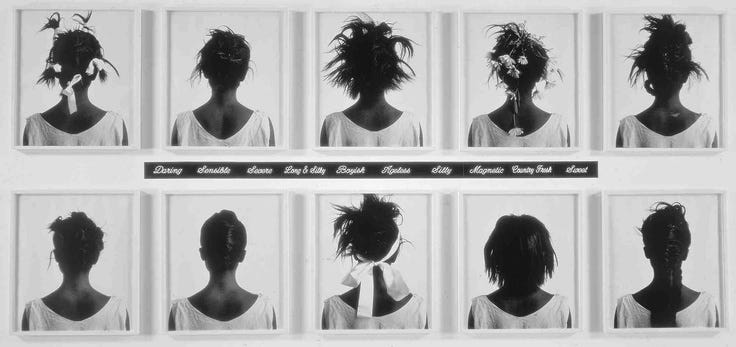
Lorna Simpson’s practice as a conceptual photographer and multimedia artist changed the way we understand representation, race, and the body. Her use of language and imagery unravels the limitations placed on Black women in visual culture. What I admire about Simpson is her insistence on subtleties. She doesn’t scream, but she disarms.
Her pieces sit with you like a mirror that doesn’t lie. In many ways, her work inspired how I approach my Black Series. I don’t want to create something that you simply glance at. I want to create something that stays with you, unsettles you, and asks more of you.
Simpson’s legacy reminds me that art can be both quiet and radical. Both restrained and revolutionary.
Shareece Williams: Architect of Impact
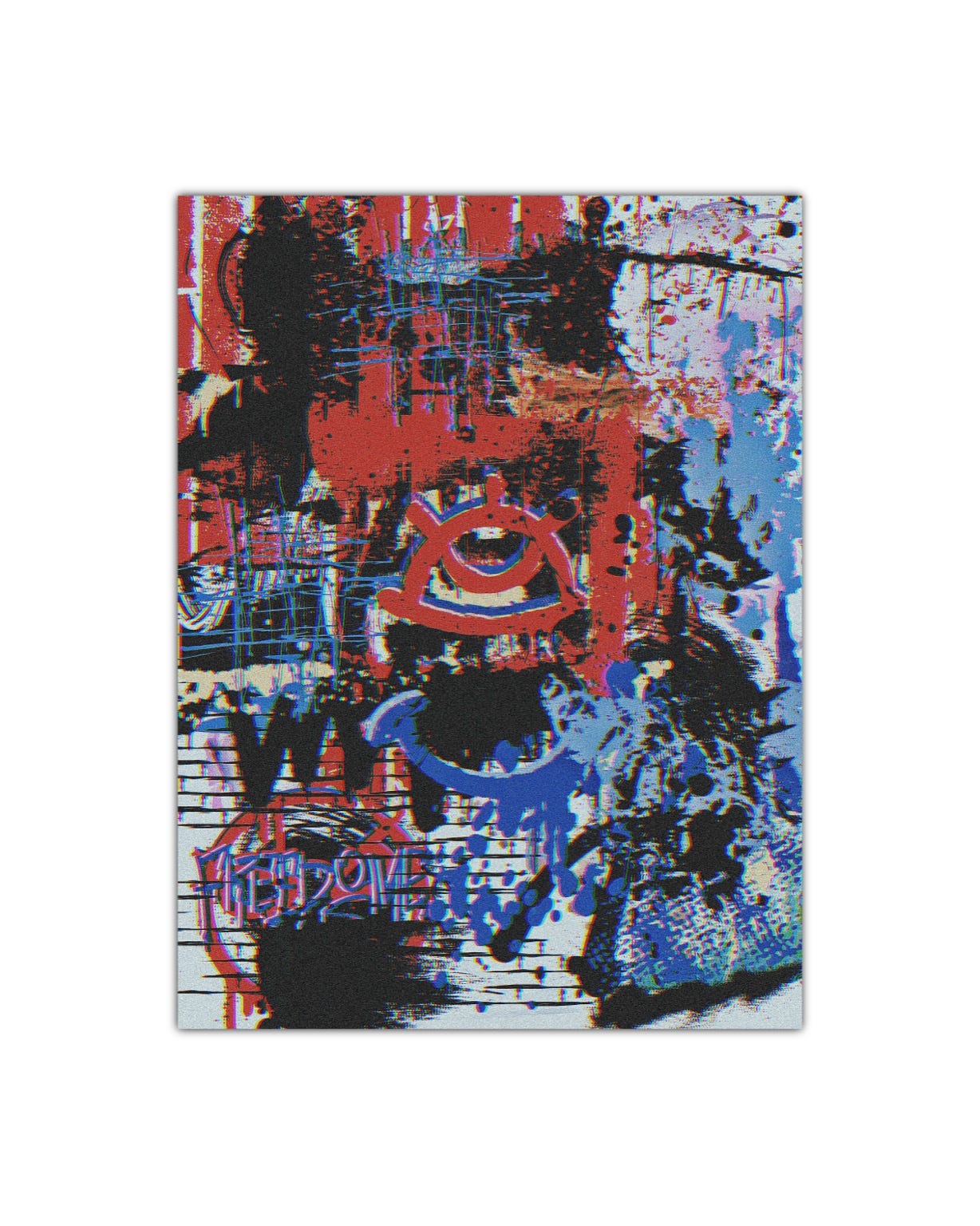
I don’t mention myself for vanity. I mention myself because I know my mission; and I know what I’ve survived to get here.
As a survivor, an artist, and a cultural architect, my work is both personal and public. Whether I’m building Voices For Us, curating ARTSTACK, or creating visual essays like No Love Was Lost, I’m carving out space for what society often tries to erase.
My belief is that art is not an accessory to society. It is a necessity. It documents pain, reimagines futures, and gives voice to the silence that trauma creates. From my first digital collage to my first performing arts summit, every piece I release is a petition to culture: See us. Honor us. Let us rebuild.
Contemporary on society is more than a theme. It’s a practice. It’s a call to live, create, and speak as if we are the ones who shape the next generation’s memory.
Because we are.
The contemporary artist holds a heavy task: to process chaos and make meaning. To grieve and still create beauty. To carry the weight of injustice while building worlds of possibility.
But we do it anyway.
Because somewhere, someone will see that painting, that photograph, that protest sign, that poem and realize they’re not alone.
And that, in itself, is a shift.
So when I say “Contemporary on Society,” I’m not just naming a movement. I’m naming a moment and one that belongs to us.

ARTMOSITY: A New Gallery Era Begins
Presented by ARTSTACK
We’re thrilled to announce the opening of ARTMOSITY The Gallery, ARTSTACK’s bold new digital gallery platform, where contemporary voices take center stage and creative visionaries define the now.
Our debut exhibition is more than an unveiling
it’s a declaration.
Headlining the Gallery
We’re honored to feature the explosive new digital painting collection by our founder, The Creative Visionary
War On Billionaires – a striking visual protest that challenges the grip of capitalism, wealth inequality, and power hoarding in society.
This unapologetic body of work will anchor the launch and push the conversation forward.
🖼️ Featured Artists on Substack
In true ARTSTACK spirit, we will also spotlight emerging and established contemporary artists from our Substack community and each one offering fresh perspectives on art, culture, and the systems we navigate daily. Their work will be featured alongside original essays, digital showcases, and interactive commentary exploring the theme:
“Contemporary on Society”
These aren’t just artworks; they are statements. Each piece speaks to the world we’re living in and the world we’re trying to build.
Stay ready. Stay visionary.
Opening Soon.
 | A guest post by
|
Thank you, another fascinating presentation and project.
I can’t find the questionnaire. Can you please send the link